2026 Mobile Industry Predictions: Insights from Cyril Deschanel of Wireless Logic
Cyril Deschanel, Group Managing Director Europe & UK at Wireless Logic, shares his predictions on IoT resilience, network security, and the evolution of connectivity beyond 'connect and forget' approaches.
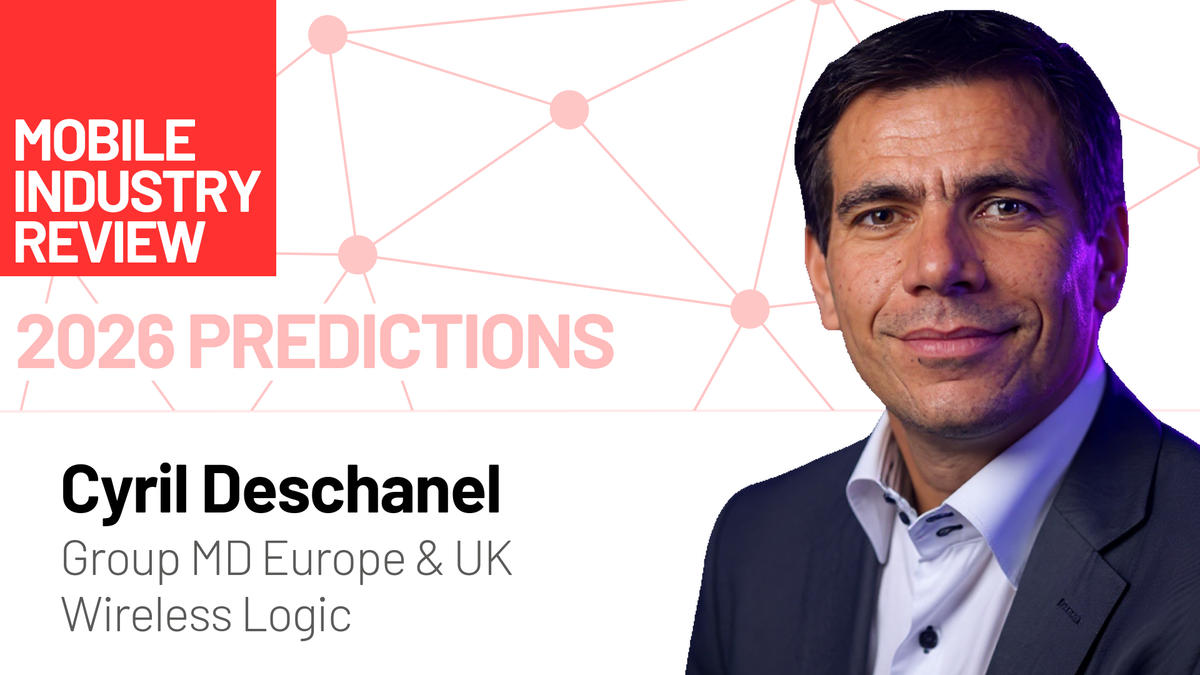
We spoke with Cyril Deschanel, Group Managing Director Europe & UK at Wireless Logic, about the strategic shifts facing the mobile industry as connected devices approach 22 billion globally. With IoT deployments scaling rapidly and network resilience under pressure, Cyril shares his perspective on why operators must look beyond simple connectivity to deliver long-term value in an increasingly complex landscape.
Over to you Cyril - my questions are in bold:
What's the biggest shift you expect across the mobile industry in 2026?
This year, we'll see a meaningful shift away from 'connect and forget' approaches to IoT. With the number of connected devices set to hit 21.9 billion, connectivity is no longer a one-time decision. It's an ongoing operational responsibility. At the same time, regulations and network standards are evolving. The introduction of SGP.32, which enables smoother updates at scale, means enterprises must adapt or risk falling behind. As a result, the industry will move away from simple coverage comparisons and price-led decisions, towards partners that can provide long-term resilience and flexibility as the market evolves. This will be the difference between providers that simply sell connectivity and those that help organisations stay resilient in a world that rarely stands still.
What customer behaviours or expectations will most challenge mobile operators and service providers?
Connectivity now underpins most of our daily operations. As such, the majority of businesses and consumers are looking for faster, safer and more reliable ways to stay connected. In Europe alone, licensed cellular IoT connections are expected to reach almost 550 million by 2030. As IoT deployments scale to this level, so do the technologies, standards, regulations and commercial models that support them. Customers will therefore expect IoT solutions that continue to work across borders, regulatory change and evolving security standards – without causing disruption or needing to be constantly redesigned.
What risks or blind spots do you think the industry is underestimating as we move into 2026?
After a year of high-profile outages in 2025, the industry needs to look beyond coverage and pricing and think more seriously about resilience. That means helping customers navigate regulatory change, evolving standards and increasingly sophisticated security threats. While networks and cloud infrastructure are generally robust, maintenance, overload, cyberattacks and extreme weather are making outages harder to avoid.
Enterprises need to shift to a "not if, but when" mindset. Often, the value of smarter design is underestimated. Devices that can fail safely, work offline and recover quickly make a huge difference when something goes wrong. With video, LiDAR and AI placing additional strain on networks, the industry needs to mature quickly.
If you were advising a mobile operator's leadership team today, what strategic priority should they focus on to stay competitive in 2026 and beyond?
In today's environment, connectivity on its own is no longer enough. Enterprises need secure solutions that deliver measurable business value, meaningful insight and the flexibility to adapt over time. As regulation tightens and expectations around data continue to rise, success will come down to how effectively operators and service providers help organisations manage change and long-term uncertainty.
Thank you Cyril!
You can connect with Cyril on his LinkedIn Profile and find out more about the company at wirelesslogic.com.