2026 Mobile Industry Predictions: Jeevithan Muttu of Motive Software
Jeevithan Muttu, SVP & GM of Device Management at Motive Software, shares his predictions on entitlement management, eSIM technology, and the monetisation of 5G networks in 2026.
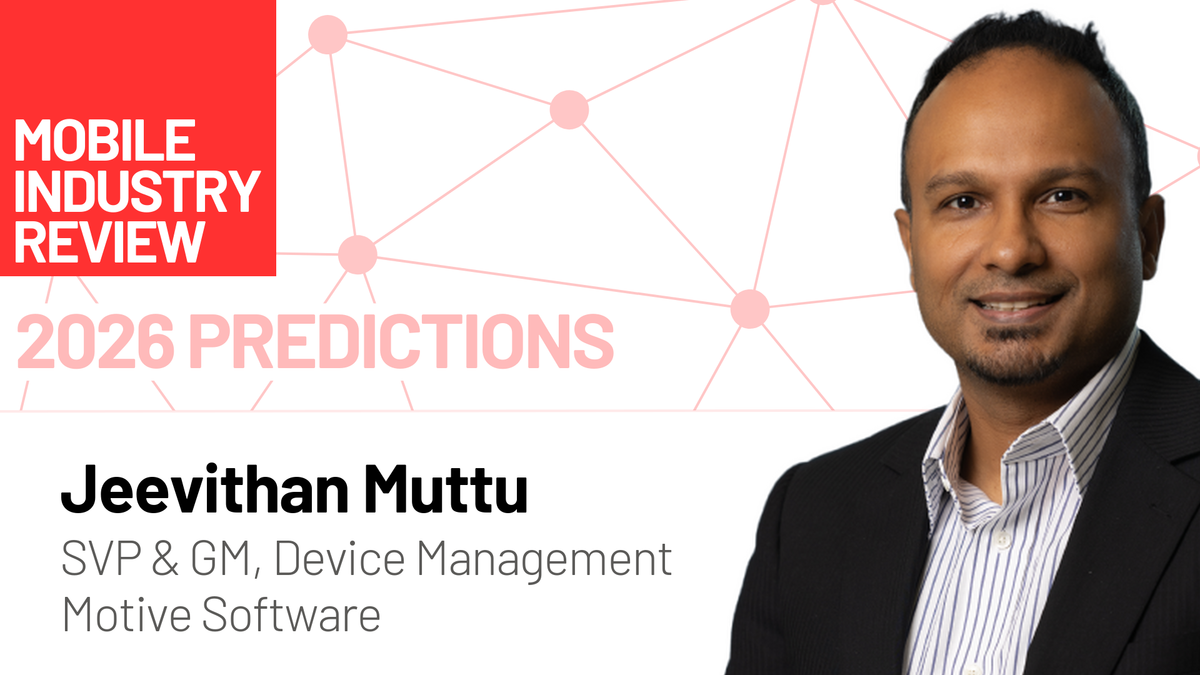
We spoke with Jeevithan Muttu, SVP & GM of Device Management at Motive Software, a leading provider of carrier-grade entitlement, service management and device management solutions. As the mobile industry shifts from building networks to fully exploiting them, Jeevithan shares his perspective on the critical role of entitlement platforms, eSIM technology, and operator monetisation strategies.
Over to you Jeevithan - my questions are in bold:
What's the biggest shift you expect across the mobile industry in 2026?
Speed and raw network performance are no longer the primary constraints. The real challenge, and also the opportunity, lies in optimising the quality of experience, applying network intelligence, and giving subscribers meaningful choice and control over how services are consumed.
Operators are now under pressure to monetise their investments in 5G and next-generation networks, and there is a clear, practical path to do so. New revenue opportunities are emerging through services such as 5G network slicing, direct-to-cell satellite coverage, seamless eSIM offers, and richer messaging experiences like RBM. The mobile industry is entering a phase of service expansion that goes well beyond launching new mobile phones.
At the centre of this shift is entitlement management, which is the ability to precisely define and execute who gets what service, when, and under which conditions. As service portfolios become more dynamic and personalised, entitlement platforms become critical to streamlining service delivery, reducing operational complexity, and enabling rapid innovation.
The move toward an eSIM-only world further accelerates this transition. With devices such as the iPhone 17 and a growing ecosystem of eSIM-only products from smartwatches and tablets to smart glasses, operators have unprecedented opportunities to bundle, extend, and personalise services across multiple devices. A modern entitlement server is essential to ensure secure, scalable eSIM onboarding and lifecycle management across this expanding landscape.
Ultimately, 2026 will be about return on investment and giving subscribers options. The industry is shifting from building networks to fully exploiting them. Operators that succeed will be those that pair their network assets with intelligent entitlement and device management platforms, turning infrastructure investments into differentiated, monetisable customer experiences.
Which emerging technology will have the most practical impact on operators, MVNOs, and the companies that support them?
eSIM technology, across both consumer and IoT use cases, will have the most immediate and practical impact. Provisioning has become entirely software-first, elevating the entitlement server to a critical component of service delivery rather than a background system.
On the consumer side, the global-scale launch of an eSIM-only iPhone 17 marks a major inflection point. This shift reinforces eSIM as the default rather than the exception, and accelerates changes in onboarding, activation, and service portability.
Wearables are another key driver, with growing demand for companion device support. As subscribers expect seamless connectivity across phones, watches, and other personal devices, operators must manage entitlements consistently across multiple form factors.
For IoT, GSMA's SGP.32 specification represents a significant step forward. It brings eSIM to large-scale IoT deployments in a more flexible, scalable, and software-driven manner.
RCS also stands out for its practical impact. It provides a secure, rich, and verified operator-owned messaging channel, raising the bar for engagement while preserving subscriber trust and confidence.
Direct-to-cell (D2C) satellite connectivity is another game changer, particularly across a growing number of markets. Operators offering these services are achieving clear differentiation, with D2C emerging as a genuine revenue driver rather than an experimental add-on.
SIM-based silent authentication for phone number verification is gaining traction as well. It enables a secure, seamless user experience by minimising friction while allowing operators to expand further into network API monetisation. Importantly, this goes beyond simply replacing SMS-based one-time passwords.
Finally, 5G on-demand slicing is seeing renewed traction. As operators refine their commercial models and operational readiness, slicing is moving closer to real-world, revenue-generating use cases.
What customer behaviours or expectations will most challenge mobile operators and service providers?
Subscribers are becoming increasingly tech-savvy, with mobile phones now serving as their primary computing devices rather than just communication tools. There is an expectation that services will work immediately and seamlessly across devices, SIMs, and use cases, with minimal setup or manual intervention.
Tolerance for errors and delays is rapidly diminishing. Even minor friction in activation, usage, or support can directly impact trust and drive churn. At the same time, customers are demanding far greater transparency around usage-based value. They expect real-time visibility into what they are entitled to, how services are consumed, and how that consumption translates into cost and value.
What risks or blind spots do you think the industry is underestimating as we move into 2026?
One major risk is underinvestment in AI and automation. While AI clearly has a role to play, it needs to be assessed and applied in areas where it delivers measurable operational and commercial value, rather than being adopted superficially.
Another blind spot is holding onto legacy infrastructure and BSS/OSS systems for too long. The pace of change has accelerated dramatically, and architectures that were acceptable five years ago now actively constrain speed, flexibility, and innovation.
Modern entitlement, service management, and device management platforms are no longer optional. Targeted investment in these capabilities is essential if operators want to unlock new revenue streams while keeping operating costs under control.
If you were advising a mobile operator's leadership team today, what strategic priority should they focus on to stay competitive in 2026 and beyond?
The opportunity to monetise 5G already exists, driven by new services and experiences rather than new devices. Subscribers are digital-first and increasingly tech-savvy, with clear expectations for flexible, configurable services that give them genuine choice and control.
Finally, speed of change has become a core competitive advantage. Whether an operator chooses a CapEx or OpEx model, long-term success depends on selecting partners that can support rapid service launches and continuous iteration, faster than the rest of the market.
Thank you Jeevithan!
You can connect with Jeevithan on his LinkedIn Profile and find out more about the company at www.motive.com.