Anyone can launch a mobile network now, and eSIM Go is quietly powering the lot
eSIM Go has taken strategic investment from Eurasian telco TNS Global, fuelling a UK MVNO enablement business that's letting anyone with a brand become a mobile operator.
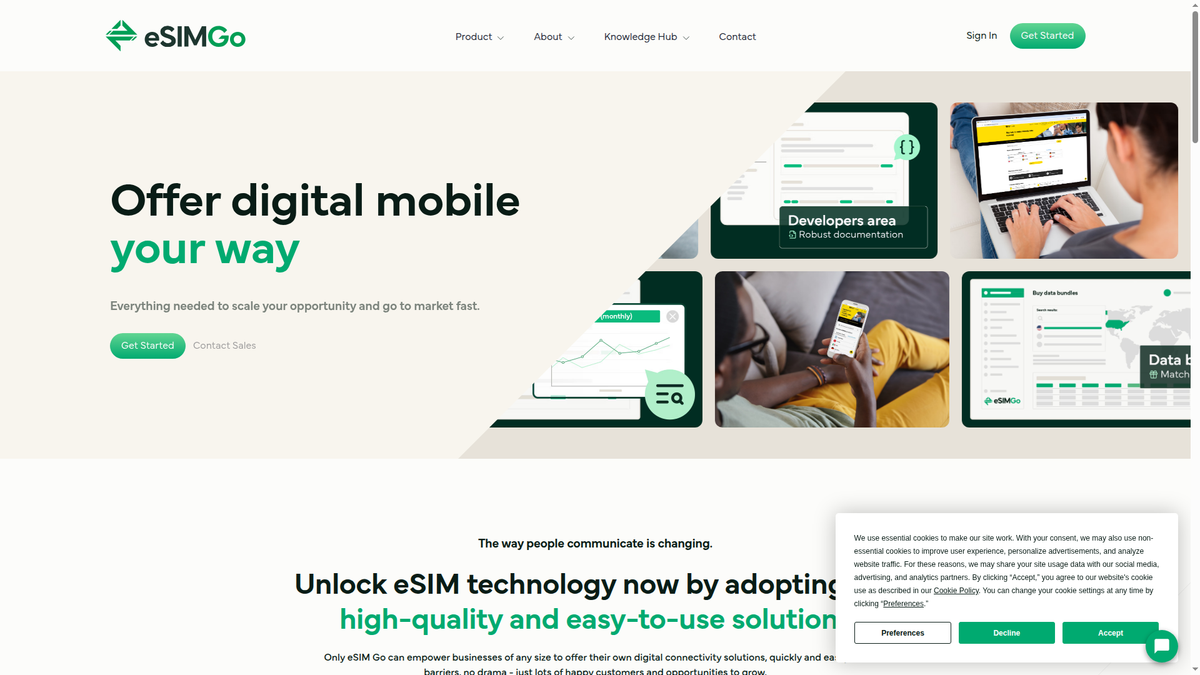
Here's a number that ought to make the big operators twitch: eSIM Go now counts "dozens" of commercial MVNO partners in the UK, barely six months after launching its own network on Vodafone Three. And it's just taken strategic investment to pour fuel on the fire.
The UK-based outfit, founded in 2020, has built a B2B platform that lets pretty much any brand spin up a mobile service with, in its own words, "virtually no barriers to entry." The early adopters tell you exactly where this is heading: Loopdl, SecondSIM, Faith Mobile and Symu, names you've probably never heard of, several of them aimed squarely at the migrant and diaspora communities the big networks have never bothered to serve properly.
The new money comes from TNS Global, a Dubai-headquartered Eurasian wholesale telecoms and infrastructure player, and it's earmarked for international expansion (Eurasia and beyond) plus scaling the MVNO enablement business that's clearly catching fire at home.
"Our focus is profitable and cash-generative growth, scaling early success in the UK MVNO market, and consolidating our market leadership in the eSIM enabler space," said Zacc Couldrick, co-founder and CEO of eSIM Go. The core team stays put; the investors bring MVNO and wholesale muscle to open doors in new regions.
On the travel side, where eSIM Go made its name, the company points to access to 1,200-plus networks across 190+ countries, and a market that Juniper reckons is growing at a 37% compound annual rate out to 2030.
My take: the travel eSIM growth is the headline the PR wants you to read, but the MVNO enablement story is the one worth watching. We've spent years talking about fintechs becoming banks; now we're watching anyone with a brand and an audience become a mobile operator, and the plumbing companies like eSIM Go are the ones quietly making money whichever brand wins. The interesting question isn't whether this fragments the UK market. It's how the incumbents respond when their own wholesale deals are arming the insurgents.
More at esimgo.com.