Eduardo Ronzano, CEO and Co-Founder, Kolet
Kolet CEO Eduardo Ronzano explains how airlines and travel brands are becoming the new distribution channel for eSIM connectivity, why unused data should carry over, and what he wants from the wider mobile industry.
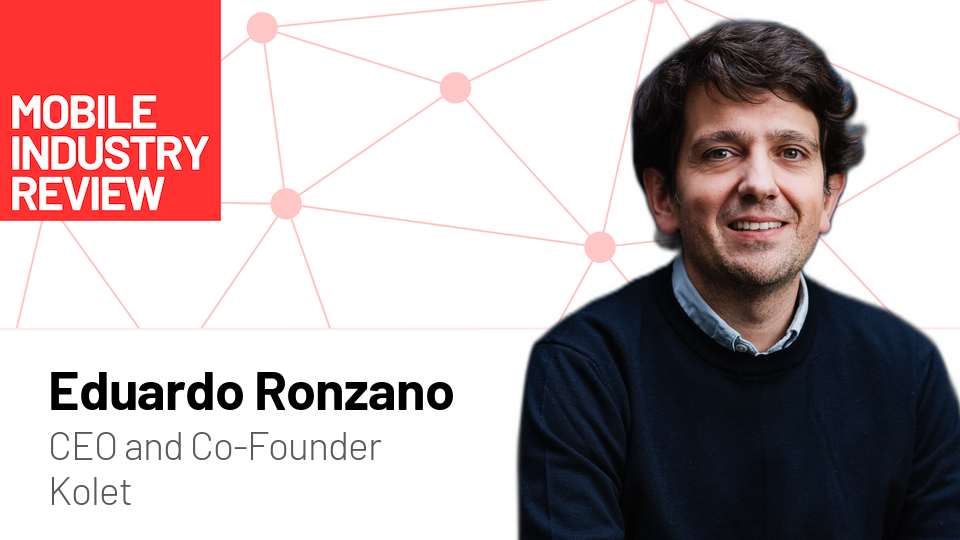
Eduardo Ronzano is CEO and co-founder of Kolet, which works with airlines and travel brands to get travellers online when they land, with one eSIM covering more than 190 destinations. He is setting the company's direction towards becoming a mobile virtual network operator (MVNO) and leads partnership sales with airlines and travel companies. In this profile he discusses eSIM distribution, unused data and the future of travel connectivity.
My questions are in bold - over to you Eduardo:
Who are you and what's your background?
The first time I got online, I was in Bilbao with my grandfather and a 14.4k dial-up modem. What struck me was that I could reach someone on the other side of the world through that one phone line. I went on to study Electrical Engineering at University College London and Télécom in France. Then I took a detour into healthcare. In 2012, I co-founded KelDoc so people in France could book a doctor’s appointment online. After we sold KelDoc, I spent a few years investing in other founders. My trips between France and Spain kept telecoms on my mind. Every time I crossed the border, I had to think about SIM cards and roaming all over again. I wanted to build something that would change that. I just hadn’t found my way in yet.
What is your job title, and what are your general responsibilities?
I’m Kolet’s co-founder and CEO. My first job is to set the direction. We’re starting with travel, and our ambition is to become a mobile virtual network operator (MVNO). That would let us build our own mobile service using other operators’ networks. I’m also Kolet’s first salesperson. I spend much of my week with airlines and travel companies, working to close the partnerships that put us in front of travellers before they fly.
There’s one question I welcome from every airline. Who picks up if a passenger lands at 2am and needs help? In our fully managed partnerships, we do. A human on our team replies in about 6 seconds on average and our CSAT is 99.2%.
Can you give us an overview of your business and what drew you to lead the organisation?
When I moved back to Spain in 2022, I needed a Spanish number and wanted to keep my French one. Installing an eSIM let me have both on the same phone, no shop, no plastic card.
But the tech wasn't the real insight. The distribution was. For decades, getting connected abroad meant buying roaming from your operator or hunting for a SIM shop at arrivals. Once a line can be downloaded, anyone can hand it to you. And the brands best placed to do it aren't telcos. They're the airlines, insurers and travel companies you've already booked with. They know where you're going and when, so they can put data in your booking and let you set up your phone before you even leave home.
That's the bet we built Kolet on from day one: connectivity sold through travel brands, not telco stores. Air France-KLM was the first airline to offer its passengers free data with us, and many partners have followed. Travellers install one eSIM and keep it for trips to more than 190 destinations. A million of them have now activated one.
Our goal is simple: every traveller should land connected, able to find their way and feel safe from the first minute.
Who are your target customers? What's your revenue model?
Our customer is the person travelling abroad. Often the best way to reach them is through a company they’ve already booked with, like Air France, KLM, Virgin Atlantic or Kiwi.
Take Air France. A first-time Kolet user can get two days of internet access for free. We pay for that data. If the passenger wants more, they buy a plan and the airline earns a commission, including on repeat purchases. Around 70% of travellers who actually use their free data go on to buy a plan. That’s the bet we’re making when we pick up the first bill.
What's the most challenging problem your team has solved recently?
One of the trickiest problems we’ve tackled is what to do with the data left on your phone after a trip. Say you come home from Japan with 2 GB still on your plan. You’ve paid for it, but your next trip is to Mexico. How do we make those last two gigabytes useful there?
That’s why we built Kolet Koins. If you have data left on a standard plan, the app shows you exactly how many Koins you can get for it. You decide whether to convert it, and the credit is yours to put towards another plan for the next three years. I like the idea that the data you didn’t use in Tokyo can help pay for the ride you book when you land in Mexico City.
If you had a magic wand, what one thing would you change in the mobile industry?
I’d put an end to the guessing game when you land abroad. Before I turn on mobile data, my phone should tell me in plain language what I’ll pay today, how much data that buys and what happens when it runs out. If the next megabyte is going to cost me extra, give me the price and let me decide. Nobody should have to do roaming maths at baggage claim.
What is your message for the larger players in the mobile industry marketplace?
Give people more say over the data they’ve paid for. If I’ve paid for the data, let me decide who uses it. Say I’m travelling with a friend. I’ve got 2 GB left and she’s run out. Why shouldn’t I be able to send her a gigabyte so we can go our separate ways and still find each other for dinner?
At Kolet, you can send data from an eligible paid plan to someone using just their email address, even if they’ve never used Kolet before. I’d love to see more operators make that possible. We already compete on how much data we put in a bundle. Let’s compete on what people can do with it once they’ve paid for it.
Where do you get your mobile industry news from?
I use LinkedIn and X to hear directly from people building networks, devices and apps. For the travel side, I follow Skift and the conversations at Phocuswright. An operator announcement might tell me a new service is live. A conversation with an airline tells me whether passengers can actually find it when they check in.
Can you list 3 people you rate from the mobile industry that we should be following on LinkedIn, and why?
1) Benedict Evans. He puts out the best reports I know on the global tech market, including mobile. I like the way he uses a chart to show what’s changing across countries and why it matters.
2) Jon Gieselman. Jon is one of the very best marketers working in US telecoms today. He’s now at Comcast after leading marketing for Apple’s services and running Expedia Brands. We’re lucky to have him on Kolet’s board.
3) Pankaj Mohan Pawar. He’s the CEO of Jio Platforms. I’d follow him for the Indian perspective on mobile. Jio is a fascinating example of what happens when affordable data puts the internet within reach of hundreds of millions of people.
What are your go-to mobile apps for both work and personal use?
Superhuman for email, LinkedIn for people and ChatGPT/Claude for turning a rough idea into reality.
Outside work, it’s Spotify and Google Maps. I hook my playlists and my favorite spot lists to ChatGPT to get notifications of upcoming concerts or new spots that match the spots I usually like.
Tell us about your approach to mobile devices - what do you use and what drives your upgrade decisions?
I’m on an iPhone 18 Pro with 1 TB of storage. I keep both my local line and my Kolet eSIM switched on all the time. That way, whenever I travel abroad, my backup data connection is ready as soon as I land.
I usually upgrade about every three years. I start thinking about it when I’m reaching for a charger halfway through the day and apps take longer to open than they used to. What tips the balance is a real jump in camera quality. With two kids, that’s an upgrade I’ll appreciate long after the phone stops feeling new.
What's the best new mobile technology product or service you've seen recently?
Starlink Wi-Fi on aircraft. I’ve caught myself checking whether my particular plane has it before a flight. The clever part is using satellites in low Earth orbit to cut the delay that used to make even a simple exchange of messages feel slow. There’s something wonderfully odd about having a perfect internet connection over the Atlantic and then hunting for Wi-Fi on the ground to order a taxi.
Finally, let's talk predictions. What trends do you think are going to define the next few years in the mobile industry?
I see three shifts. First, more people will get connected through the company they booked their trip with. Your airline or insurer already knows where you’re going and when. It can put a data plan in your hands before departure. The operator still supplies the connection, but the first conversation about mobile data may well be with your airline.
Second, I think travellers will expect unused data to carry over. If I’ve paid for a plan in Japan and come home with a couple of gigabytes left, I want to put that value towards my next trip, wherever I go.
Third, we’ll start designing for the moment the data runs out. This is the one I’m most excited about. An airline can already arrange for passengers to keep access to its app even if they no longer have data. I’d love that to become routine. If your gate changes while you’re halfway across a terminal, you should still get the update. That’s the kind of mobile innovation a passenger would actually thank you for.
Many thanks to Eduardo for taking the time to share his insights with Mobile Industry Review. You can learn more about Kolet on their website.