Leading the Shift to Predictive Telecom: An Interview with Pedro Costa of Motive Software
Pedro Costa discusses AI-driven predictive care in telecoms, the shift from reactive to proactive service management, and why operators must embrace AI now or risk being left behind.
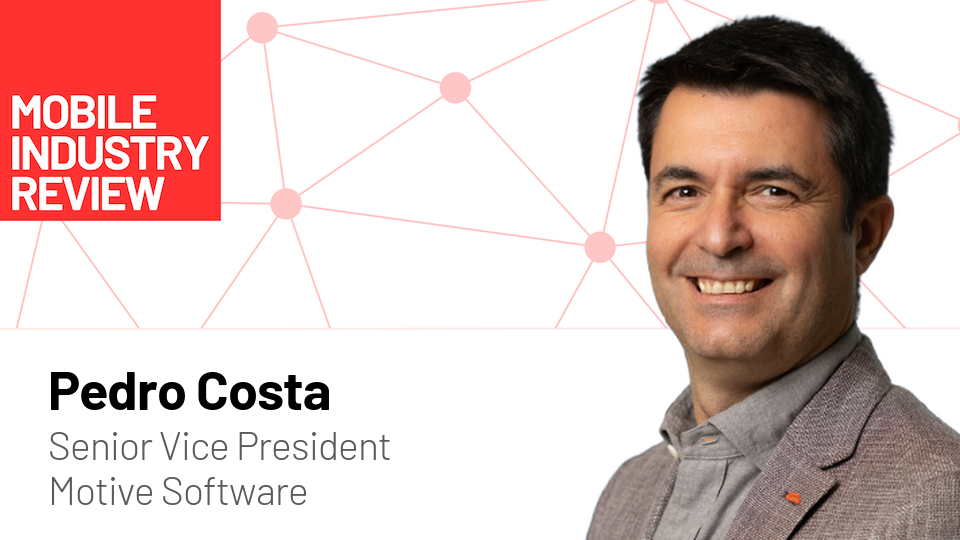
Today we’re meeting Pedro Costa, Senior Vice President and General Manager for Motive SMP at Motive Software. They specialise in intelligent service management, automation, and orchestration for telecom operators and large service providers worldwide.
Over to you Pedro – my questions are in bold:
Who are you, and what’s your background?
I’ve always been fascinated by technology, but I’ve also been drawn to understanding how things work, how processes fit together, and how they serve the customer. I graduated in Electronics and Computers in Lisbon in 1994 and later took postgraduate courses in Project and General Management. That mix has defined me ever since.
I joined Alcatel the same year I graduated, when fixed-line systems were still the norm. I began in R&D before transitioning into professional services, where I led delivery teams and explored how new technologies could transform the way we worked. I was always chasing the next innovation (ADSL, NGN, IMS), eager to understand and apply each one.
At Alcatel, I led IPTV deployments in Portugal for Portugal Telecom and Vodafone. These complex projects brought together video platforms, set-top boxes, gateways, and device management systems, and the success of that work took me into the global video delivery team, supporting operators across Europe, North America, and Asia.
When Nokia acquired Alcatel and later sold the video business to Lumine Group, I made the move too. I joined Lumine in 2019 and found a culture that aligned with my approach, focusing on long-term growth, smart integration, and data-driven decision-making.
What is your job title, and what are your general responsibilities?
I’m now Senior Vice President and General Manager for Motive SMP, our Service Management Platform business. My focus is on intelligent service management, automation, and orchestration. I led the integration of acquired businesses and currently oversee product development and delivery, helping teams and customers improve operational efficiency through automation and AI-driven processes.
Can you give us an overview of your business and what drew you to lead the organisation?
Motive was founded in 1997 in Austin, Texas, developing intelligent device and service management platforms. It was later acquired by Alcatel and, most recently, became part of Lumine Group following a carve-out from Nokia in 2024.
I was invited to lead Motive SMP within Lumine, bringing my experience in integration, process improvement, and innovation. What attracted me was the opportunity to grow the business and apply AI and automation to evolve how operators deliver customer service.
Today, Motive supports over 150 tier-one customers globally, helping them enhance service quality, efficiency, and customer experience.
Who are your target customers? What’s your revenue model?
Our customers are telecom operators and large service providers worldwide. We offer automation and service management software, supported by integration and professional services. Our goal is to help customers transition their care operations from reactive to AI-enabled, predictive care.
What’s the most challenging problem your team has solved recently?
A mobile operator came to us with a recurring service issue affecting users but almost impossible to trace. Complaints were the only real signal, leading to long troubleshooting sessions.
Because they knew Motive had advanced generative and agentic AI capabilities, they asked us to build a predictive care solution. We began by defining the data model and evaluating existing data, then expanded it by collecting more network and device data over several weeks.
Using AI models within our platform, the solution can analyse data and detect changes that could lead to service issues. The goal is to move from reacting after the fact to anticipating problems and acting before they happen.
Progress so far is promising. Predictive care can reduce complaints, shorten resolution times, and even eliminate some issues entirely. Across the industry, every operator we speak to is exploring how AI can automate processes, empower agents, and pave the way toward proactive operations.
If you had a magic wand, what one thing would you change in the mobile industry?
I’d remove the gap between early adopters and followers. With AI moving so quickly, there will be no followers—only early adopters and those left behind. The telcos that embrace AI today will define the new status quo.
What is your message for the larger players in the mobile industry?
Stop treating AI as hype and start experimenting. Build internal AI capability, partner with vendors who have AI-ready solutions, and begin collecting data now. AI will transform every layer of operations. Those who start today will have a significant advantage tomorrow.
Where do you get your mobile industry news from?
I follow a mix of sources:
- TM Forum
- Broadband Forum
- AI and technology groups on LinkedIn
- Generative AI Forum
- Platforms like OpenAI, Perplexity and Gemini
- YouTube and online communities
Can you list three people you rate from the mobile industry that we should be following and why?
I follow groups more than individuals, but I’d mention:
- Steve Jobs – for his disruptive vision with the iPhone
- Bill Gates – for thought leadership in tech and innovation
- Mark Zuckerberg – for driving large-scale technological shifts at Meta
(Although not mobile-industry specialists, the inspirations are clear.)
Tell us about your approach to mobile devices. What do you use and what drives your upgrade decisions?
I’ve been an iOS user for a long time. It’s reliable, secure, and integrates seamlessly with my laptop. It provides a consistent environment across all devices. I’ve had no reason to change—though I always stay curious about what innovation comes next.
What’s the best new mobile technology you’ve seen recently?
On-device AI—LLMs running directly on smartphones—is the most exciting development. Until now, assistants relied on cloud processing, meaning personal data left your phone.
On-device AI changes that:
- Local processing
- Better privacy
- Lower latency
- Ability to run offline
Manufacturers like Apple, Google, Samsung, and chipset makers like Qualcomm are all pushing fast into this hybrid model. Personal tasks will stay fully local, with heavier tasks offloaded to the cloud when needed. This will redefine the mobile experience and accelerate adoption.
Finally, what trends will define the next few years in the mobile industry?
We’re moving from reactive to anticipatory technology. Hybrid and on-device AI will turn phones into proactive companions that understand habits and anticipate needs.
For operators, everything begins with data—collecting it, structuring it, and preparing it for AI-driven insight. The future will favour those who embrace this shift quickly.
Thank you Pedro. You can find out more about Pedro on his LinkedIn Profile and read more about Motive Software at motive.com.