Liz Parry on the Future of Billing, BSS and eSIM in the UK Mobile Market
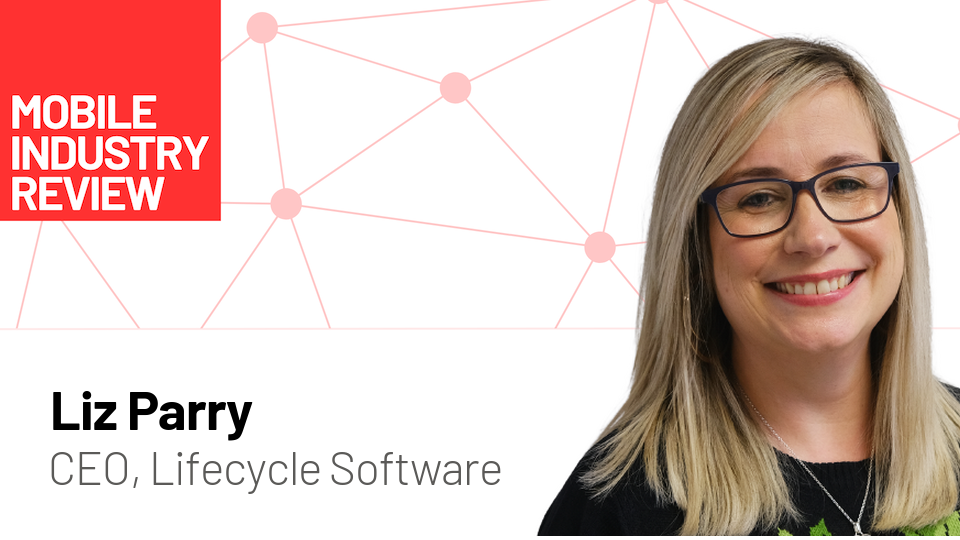
Today we're meeting Liz Parry, CEO at Lifecycle Software. They specialise in innovative and flexible billing solutions and Business Support Systems (BSS) that help mobile and subscription-based businesses grow.
Over to you Liz - my questions are in bold:
Who are you and what's your background?
I'm Liz Parry, CEO of Lifecycle Software. My career has taken me through a variety of roles, from finance and project management in industries like hospitality, and the NHS, to consultancy work, before moving into telecoms. I joined Lifecycle Software over a decade ago and worked my way up through roles spanning revenue assurance, service management, business analysis, technical solutions, and professional services, before becoming Chief Commercial Officer and now the first female CEO in the company's 30-year history.
That breadth of experience has been invaluable, providing me with both a commercial and technical perspective, as well as a genuine appreciation for how every part of a business contributes to customer success.
What is your job title, and what are your general responsibilities?
As CEO, my focus is on steering the company's strategy, ensuring our products stay ahead of industry needs, and supporting our teams to succeed. On any given day, that could mean working with a customer on a new MVNO launch, reviewing product roadmaps, or making sure our people have the tools and support to thrive. My main focus is growth: how we expand internationally, how we innovate more quickly, and how we establish lasting partnerships.
Can you give us an overview of your business and what drew you to lead the organisation?
Lifecycle Software is a telecoms software provider offering innovative and flexible billing solutions and Business Support Systems (BSS) that help mobile and subscription-based businesses grow. We specialise in platforms that power MVNOs, providing everything a mobile virtual network operator needs to run, from billing to provisioning to customer front-ends.
Our flagship NEXUS platform enables operators and MVNOs to configure and launch services in days rather than months. It's multi-tenanted, cloud-native, and designed to strip away complexity while helping brands stay agile in a disruptive market. We've been working with Three for almost 10 years, and we launched their digital sub-brand Smarty in 2017, which we still support today, alongside brands like Superdrug Mobile.
What drew me to lead Lifecycle Software was not just the strength of the offering, but also the strength of the people and the culture. As part of the Lumine Group, I experienced a talent development approach that provided me with both the support and the stretch I needed to step into larger roles. That recognition, combined with my passion for leading teams and driving change, made me confident that I could guide Lifecycle into its next chapter, building on our legacy while pushing us into new opportunities for innovation and growth.
Who are your target customers? What's your revenue model?
Our target customers are mobile operators and MVNOs - both established players and new entrants. We provide a one-stop shop that's agnostic to the network they plug into. Revenue comes from software licensing, ongoing service contracts, and professional services. Increasingly, our consultative approach is part of the value: we don't just hand over a platform, we guide brands through commercial strategy, regulatory compliance, pricing design, and customer success.
What's the most challenging problem your team has solved recently?
One of the biggest challenges is striking a balance between speed and complexity. MVNO brands want to launch quickly, but behind a "simple" pricing plan lies a web of billing rules, data caps, and regulatory obligations. Recently, we've focused on making this process easier by embedding more decision support and consultancy into our NEXUS platform and services. That way, even MVNOs with little in-house expertise can make smart choices and launch products that work from day one.
If you had a magic wand, what one thing would you change in the mobile industry?
I'd accelerate the adoption of eSIM in the UK.
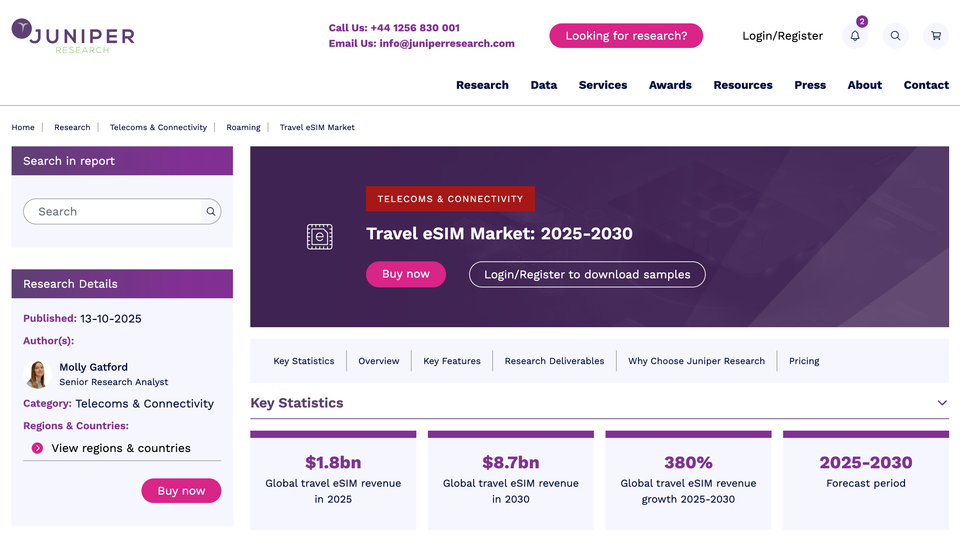
It's frustrating how slowly the market has embraced it, especially when compared to travel eSIM providers, who are setting the bar for customer experience. Operators have been hesitant because of concerns over churn and ARPU, but customers want flexibility. Regulators will step in eventually, but I'd rather the industry took the lead now.
What is your message for the larger players in the mobile industry marketplace?
Operators: Unlock the value of your data! They are sitting on a goldmine of information. Every swipe, tap, and call contains insights into customer behaviour, network performance, and operational efficiency. Yet too often, that data is underused because of concerns about complexity, cost, or compliance. The operators that will win are the ones that turn raw data into action: predicting demand, optimising their networks, and creating hyper-personalised services that customers actually want.
Real-time intelligence can recover lost revenue. Something as simple as spotting a failed roaming call and sending an immediate solution, for example. Data mining doesn't have to mean complex AI deployments. With the right orchestration engines, automation, and cloud-native platforms, operators can unlock value quickly and scale from there. The challenge is shifting the mindset from short-term gains to long-term competitive advantage. The data is there. The opportunity is there. The players who prioritise it will lead the market.
Where do you get your mobile industry news from?
I stay informed through industry bodies like the TM Forum and GSMA, as well as publications like Mobile Industry Review, of course. I also value conversations with peers, partners, and customers. Often, the best insights come directly from the people building and using the technology.
Can you list 3 people you rate from the mobile industry that we should be following on LinkedIn, and why?
- Tanya Hyams-Young – Her experience and commentary on the role of AI on telecoms provide practical insights and thought leadership in the industry.
And analysts like:
- Alex Davies, from Rethink Research
- Dario Talmesio from Omdia
What are your go-to mobile apps for both work and personal use?
I try to keep my mobile use simple but effective. For work, I'm all about Microsoft's tools: Teams for quick messaging and collaboration, Outlook for keeping on top of emails, and video conferencing to stay connected with colleagues and partners.
I also check LinkedIn regularly; it's my go-to for keeping up with the latest industry news and spotting trends in telecom and mobile. On the personal side, I'm like most people. WhatsApp is my lifeline for catching up with family, friends, and even some work chats when needed. I like having a mix of structured tools for productivity and flexible apps that let me stay connected on the go.
Tell us about your approach to mobile devices - what do you use and what drives your upgrade decisions?
I tend to be platform-agnostic, using both Apple and Android devices depending on the use case. For work, I favour tools that integrate seamlessly with our systems, so I'll often choose devices that make collaboration, video calls, and productivity apps run smoothly.
When it comes to upgrades, I generally wait until a device genuinely adds value. I don't replace devices every year or chase every new gadget. If my current device is still doing the job well, I hold off. Ultimately, my approach is driven by functionality and productivity, not trends. A mobile device has to help me get work done, stay connected, and keep life running smoothly, whether that's in the office, at home, or on the move.
What's the best new mobile technology product or service you've seen recently?
Travel eSIM providers that have nailed a seamless customer experience have impressed me most recently. Making it possible to land in a new country and be instantly connected is a benchmark for how the wider industry should approach eSIM adoption.
Finally, let's talk predictions. What trends do you think are going to define the next few years in the mobile industry?
I think there are a few themes that will dominate over the next few years:
- Consolidation – with the Three/Vodafone merger, the UK market is shifting from four to three networks. That will reshape the dynamics for MVNOs. eSIM mainstream adoption – once regulators and consumer demand catch up, it will become a baseline expectation.
- Data monetisation – operators sitting on vast datasets will finally start investing in tools to turn insight into revenue.
- Cloud-native platforms – we've completed our own transition, and it's a game-changer for scalability and resilience.
- AI for optimisation – I'm a cautious AI adopter, but I see huge potential in network optimisation, customer engagement, and decision support.
Thank you Liz. Connect with Liz on LinkedIn and read more about Lifecycle Software via their website.